The SCRR 2024 Winter Institute for Educator Healing
Heart in Hand: Holding Generative Space for our Collective Healing
January 11, 2024
9:00 am – 1:00 p.m. PT / 11:00 a.m. – 3:00 p.m. CT / 12:00 p.m. – 4:00 p.m. ET
(convert to your time zone)
This event has passed.
One of our project’s central tenets is to listen and learn from educators: What is most needed at this moment? What is most needed to recover from a school crisis? How might we create spaces for educators to experience their own processing so that they feel more resourced and supported?
Join us in community on January 11th for an opportunity to slow down, remember, and forge meaningful pathways towards healing and renewal. During SCRR’s annual winter institute, we hold space that allows us to catch our breath and dive inward for self exploration and purposeful action using processes that uplift meaning-making through art and ritual.
This winter, we focus on metabolizing our grief so that there is room to be present for what is and so that we might intervene upon the conditions impeding our wellness and welcome the new year more deeply renewed.
Note: this is less of a space to learn how to do for others and more of a space that centers how to be for yourselves.
2024 SCRR Winter Institute Goals
- Create a safe, generative, and regulating experience for educators, school-based mental health providers, and people who tend to the emotional well-being of youth.
- Name the systems, structures, values, beliefs and ways of being that impede our individual and collective wellness and healing.
- Provide an opportunity for self-attunement, wholeness and healing for educators and other school professionals through connection, storytelling and art amidst crises.
- Engage participants in community-valued and evidence-based, art centered, ritual activities that support the metabolization of pain, trauma, crisis and grief as to positively impact our process of recovery and renewal.
- Support participants in imagining new ways to incorporate ritual and art into their personal practice in crisis recovery.
Intended Audience
Anyone who tends to the wellness of young people within a school setting (school leaders, educators, community service providers, guidance counselors in higher education, social workers, etc.).
Our time together will consist of:
9:00 a.m. – 9:15 a.m. PT/ 11:00 a.m. – 11:15 a.m. CT / 12:00 p.m. – 12:15 p.m. ET
Welcoming and Arriving
Introduction to SCRR & orientation to the day
9:20 a.m. – 9:55 a.m. PT / 11:20 a.m. – 11:55 a.m. CT / 12:20 p.m. – 12:55 p.m. ET
Keynote Address – Tiffani Marie
“Toward Collective Grief and Healing through Apocalyptic Education”
This presentation explores the profound impact of social death within the American schooling system, identifying schools as key perpetrators of societal violence (Sharpe, 2016; Givens, 2021; Woodson, 1998). It examines the intricate connections between the subjugation of Black people and the maintenance of schooling structures (Patterson, 1982; Wilderson, 2003), advocating for a thoughtful reevaluation of pedagogical postures that both intentionally and inadvertently perpetuate these cycles of crisis and violence.
Central to this talk is a call towards ancestral pacing, deep connection, and imagination. Conjuring and centering an Apocalyptic Educational framework (Marie & Watson, 2020), and grounded in African ancestral wisdom (Ani, 1994; Fu-Kiau, 2014), this presentation is a profound call to honor our collective grief, reshape our educational communities, and cultivate spaces of understanding, growth, and sacred, remembered futures.
10:05 a.m. – 11:15 a.m. PT / 12:05 p.m – 1:15 p.m. CT / 1:05 p.m. – 2:15 p.m. ET
Workshop One – Hala Khouri
Attuning and Attending Practice: Movement & Embodiment
“Somatic Practices for Embodied Liberation“
Join Hala for a simple movement and reflection practice designed to support a process of radical self-investigation and compassionate movement to support our wellbeing. We will reflect on the ways we internalize harmful systems of domination and urgency and imagine in our own bodies, minds and hearts what liberation can feel like. This workshop will be part movement and meditation, part self-reflection with optional breakout rooms.
11:25 a.m. – 11:30 a.m. PT / 1:25 p.m. – 1:30 p.m. CT / 2:25 p.m. – 2:30 p.m. ET
Workshop Two – Xico Gonzalez
Attuning and Attending Practice: Arts-Based Therapeutics
“Nichos de Memoria: Remembering Our Loved Ones Through Mini Altar Making”
Xico González will take educators through a nostalgic journey, one of remembrance, honor, and celebration. González will provide educators with a creative tool to help them connect to students through a traditional art form known as “mini altares.” These mini altares are created through the use of Día de muertos iconography, artifacts and poetry.
12:40 p.m. – 1:00 p.m. PT / 2:40 p.m. – 3:00 p.m. CT / 3:40 p.m. – 4:00 p.m. ET
Integration & Closing
Materials
- SCRR 2024 Winter Institute for Educator Healing – Slide Deck
- Toward Collective Healing – Apocalyptic Education Framework
- Nichos de Memoria Slide Deck
- Mini Altares Guide
Facilitator/Presenter(s)

Oriana Ides (she/her), Lead Institute Faculty
M.A. Clinical Psychology, APCC, PPS, SCRR Field Coach
Oriana Ides approaches healing the wounds of trauma and oppression as core elements of social justice and liberation. She has worked with young people across life’s course from elementary school to college, and has served as administrator, school-based therapist, classroom educator and program director. She is deeply committed to generating equity within school structures and policies by focusing on community valued mental health techniques and institutional design.
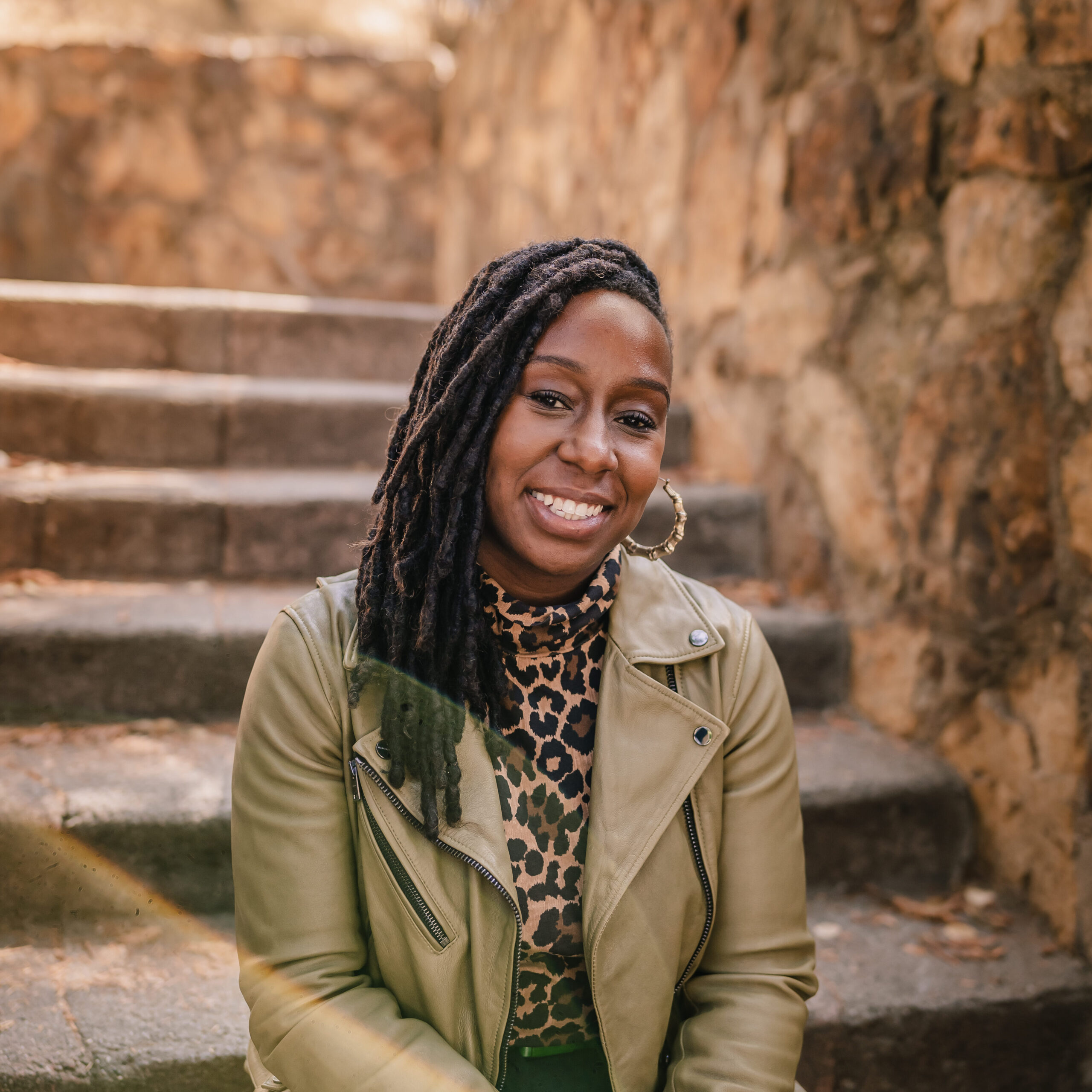
Tiffani Marie, Ph.D. (she/her)
Institute for Regenerative Futures / Apocalyptic Education
Tiffani Marie is the daughter of Sheryll Marie, granddaughter of Dorothy Wilson and Annette Williams, and the great-grandaughter of Artelia Green and Olivia Williams. She comes from a long line of Arkansas educators. She is passionate about learning with and from youth, building with sacred and beloved community, sewing, music production, and connecting to the natural world.
Tiffani Marie is also the co-director of the Institute for Regenerative Futures and Professor of Teacher Education and Ethnic Studies at San Jose State University, where her research focuses on health disparities, the study of anti-blackness as a social determinant of health, and the embodiment of critical pedagogies as an attenuating agent of toxic stress in black children.
Her broader research interests integrate theoretical frameworks and methods from public health, critical race studies, and education. Her current research findings demonstrate that while schooling is a powerful indicator of health, it does not benefit all groups equally. Hence, Marie’s scope of work extends beyond promoting mastery of academic content toward more robust health-based educational interventions that may lead to increased educational pathways and greater health outcomes for youth.
Hala Khouri, M.A. (she/her)
Hala Khouri trains direct service providers and educators on how to be trauma informed with their students and clients. Believing that oppressive systems harm all of us, even those who benefit and it is our work to heal together, Hala has a private practice for individuals and couples and works with A Thousand Joys training direct service providers and educators to be trauma informed and culturally responsive. The focus of both her clinical and group work has been trauma- personal, interpersonal and systemic. For more from Hala visit, https://halakhouri.com/.
Xico González, M.A. , M.F.A. (he/him)
Xico González is an award winning educator, curator, interdisciplinary artist, poet, and a political and cultural activista/organizer based in Sacramento, California. He received a MA in Spanish from Sacramento State, and a MFA in Art Studio from the University of California, Davis. González has exhibited widely since the late 90s and is well known for his politically charged posters and his revoltoso poetry. His work is archived at Sacramento State, San José State, the Center for the Study of Political Graphics, the Smithsonian American Art Museum, and the Sacramento Public Library amongst other public and private collections. While González has exhibited nationally, he has also taken part in exhibitions in Argentina and China. González’s written work has been published in several publications such as the award winning poetry anthology “The Border Crossed Us,” from Vagabond Press. González currently teaches Spanish and Art Studio at the Met Sacramento High School, where he promotes social justice, cultural awareness, and community engagement in and out of the classroom. Find out more about Xico and his work at https://xico-gonzalez.com.
FAQs
- Can I come to some of the Institute if I can’t make the whole time? Yes, please come to as much of the program as you can!
- Are CEs offered? No.
- Are certificates of completion offered? Yes, upon request.
- Will this space be recorded? Yes.
Resources for Extended Learning
Check out the many learnings and offerings from our previous Institutes now housed on our “Mending our Wounds” – Educator and School Leader Recovery & Renewal resource hub.
In the words of the participants from previous SCRR Winter Institutes:
This SCRR program allowed me to reconnect with myself, identify and take time for my own self-care, and be reinforced that it is necessary for personal reflection and care in order to care for others.
I have a personal and professional interest in collective care practices to promote healing and well-being. Feeling the stress like many others I know that the more balanced and self-regulated I am impacts the community around me, which attending this webinar helped tremendously!
Self reflection and acceptance of where I am, who I am, and where I am going.
I feel as if something has been poured into my spirit; restored…
Questions? Email program designer and SCRR field coach Oriana Ides
Oides [at] cars-rp.org
