Together We Weave
Collective Storytelling as a Source of Healing in Our School Communities
The SCRR 2025 Winter Institute for Educator Healing
January 30, 2025
9:00 am – 12:30 p.m. PT / 11:00 a.m. – 2:30 p.m. CT / 12:00 p.m. – 3:30 p.m. ET
This event has passed.
How might storytelling support our individual and collective renewal and healing?
How might storytelling enable us to envision and create alternative futures for schools’ crisis healing?
Join us in vibrant community on January 30th for an opportunity to slow down, remember, feel into, and forge meaningful pathways toward renewal through the healing power of our personal and collective narratives.
The SCRR 2025 Winter Institute for Educator Healing will offer us a supportive space to catch our breath and engage in deep noticing, reflection, and exploration using processes that uplift storytelling, collective witnessing, and coherent narrative construction.
This immersive experience will not only promote personal healing but also foster collaboration and understanding among participants to reconnect with their own stories and those of their communities. Together, we will cultivate new perspectives and meaningful connections that inspire renewal and resilience in our educational journeys.
Connecting authentically with ourselves is the wisdom required to engage in transformative work and return to purpose. Our time together will fortify us as we embark on the new semester. This winter, we will mine through our experiences to name and affirm new values, relationships, ideas, and ways of being that might support our healing and renewal onward.
Note: this is less of a space to learn how to do for others and more of a space that centers on how to be for yourselves.
2025 Winter Institute Goals
- Create a safe, generative, and regulating experience for educators, school-based mental health providers, and people who tend to the emotional well-being of youth.
- Provide an opportunity for attunement, wholeness and healing for educators and other school professionals through connection and storytelling after a big thing (crisis event).
- Engage participants in community values and evidence based, art centered, ritual activities that positively impact the process of recovery and renewal after a crisis.
- Support participants in imagining new ways to incorporate ritual and art into their personal practice in crisis recovery.
Intended Audience
Anyone who tends to the wellness of young people within a school setting (school leaders, educators, community service providers, guidance counselors in higher education, social workers, etc.).
Session Materials
- SCRR 2025 Winter Institute for Educators Slide Deck
- Pantoum Poem Instructions from Michelle “Mush” Lee
Our Flow
Welcome & Arriving – 9:00 a.m. – 9:20 a.m. PT/ 11:00 a.m. – 11:20 a.m. CT / 12:00 p.m. – 12:20 p.m. ET
Introduction to SCRR & orientation to the day
Keynote Address – Michelle “Mush” Lee – 9:20 a.m. – 9:50 a.m. PT / 11:20 a.m. – 11:50 a.m. CT / 12:20 p.m. – 12:50 p.m. ET
“Historians of Healing: Memory & Transformation through Storytelling”
In this keynote, we’ll delve into the profound role storytelling plays in shaping and preserving memory. Explore how poetic narratives serve as a bridge to the past, allowing us to revisit, recognize, and sometimes even revive powerful but hidden personal truths, guiding us to re-remember with clarity and intention. By understanding the mechanics of storytelling through memory, we’ll learn how stories are not just records but active historians of healing.
Integration Practice and Transition Time – 9:50 a.m. – 10:00 a.m. PT/ 11:50 a.m. – 12:00 p.m. CT / 12:50 p.m. – 1:00 p.m. ET
Workshop – Chelsea Gregory, Tatiana Chaterji, Ramy El-Etreby – 10:00 a.m. – 12:05 p.m. PT / 12:00 p.m – 2:05 p.m. CT / 1:00 p.m. – 3:05 p.m. ET
“Storytelling as a Practice for Collective Care”
Given the immense pressures under which educators live and serve their communities, we invite participants to share their load through the transformative vehicles of storytelling and witnessing. In this session, you will have the opportunity to reflect on your own stories through verbal, writing, and embodied prompts, replenishing inner wellsprings in a space that supports the kind of introspection (both reflective and collective) that help to sustain us. Through creative practice we will cultivate a space of collective care and mutual respect, in which each participant can choose the forms of participation that are most supportive for them. Facilitators will integrate exercises from poetry, restorative justice, Theater of the Oppressed and other applied theater practices to hold the beauty, grief, stress, isolation, trauma, and wildness of the past few years.
Integration Practice and Transition Time – 12:05 p.m. – 12:10 p.m. PT / 2:05 p.m. – 2:10 p.m. CT / 3:05 p.m. – 3:10 p.m. ET
Meaning Making Discussion & Closing – 12:10p.m. – 12:30 p.m. PT / 2:10 p.m. – 2:30 p.m. CT / 3:10 p.m. – 3:30 p.m. ET
Lead Faculty

Oriana Ides, MA, APCC, PPS (she/her)
SCRR Field Coach
Oriana Ides is the School Mental Health Training Specialist at CARS, who approaches healing the wounds of trauma and oppression as core elements of social justice. She has worked with young people across life course from elementary school to college, and has served as teacher-leader, school counselor, classroom educator and program director. She is committed to generating equity within school structures and policies by focusing on evidence-based mental health techniques and institutional design. Her work to forge a more just world is motivated by and dedicated to Amilca Ysabel Mouton Fuentes.
Facilitator/Presenter(s)

Chelsea Gregory, MFA (she/her)
Chelsea Gregory (she/her) is a community-engaged artist, cultural organizer, facilitator, and RJ practitioner with over two decades of experience working with arts non-profits, educational institutions, and community-based organizations. She collaborates with Create Forward and Culture Shift Agency as an equity practitioner, curriculum writer, and program developer supporting a wide range of clients. Recent community-engaged arts projects have been in collaboration with the Othering & Belonging Institute, Urban Bush Women, Oregon Shakespeare Festival, Cornerstone Theater Company, and Working Theater. Some of the methodologies she works through are applied theater, design for belonging, anti-oppression practice, cultural strategy, restorative justice, transformational management, cultural responsiveness, mindfulness, and somatics. She weaves a rich tapestry of professional expertise together to create holistic, purpose-driven, engaging, and transformative experiences that support a culture of equity and belonging in every space she works. She has worked in many public schools throughout New York City and the Bay Area as a teaching artist and RJ specialist, and she was part of the team that implemented the first ever restorative justice initiative in New York City Public Schools.

Michelle “Mush” Lee, MA (she/her)
Mush is a poet, narrative strategist, and pioneer of spoken word pedagogy. A Harvard University Project Zero Fellow, Mush is frequently a featured speaker on the intersection of emergent cultures, racial justice, and solidarity movements, and women of color in leadership. Her talks and writings have been featured on Vogue, HBO, PBS, AfroPop, Summit Series, Social Venture Network, National Conference on Race and Ethnicity in Higher Education (NCORE), and the Berkeley Communications Conference.
In 2019, Mush was invited to serve the City of Oakland’s Cultural Affairs Division as a Cultural Strategist-in-Government (CSIG), where she worked in City departments to infuse policymaking and practices with radically creative and culturally-competent thinking and problem-solving to promote civic belonging. Mush is the Vice-Chair of the City of Oakland’s Cultural Affairs Commission and a member of the City’s Funding Advisory Committee. In her spare time, Mush enjoys running, organizing her bookshelf, and laughing at mom jokes with her son.
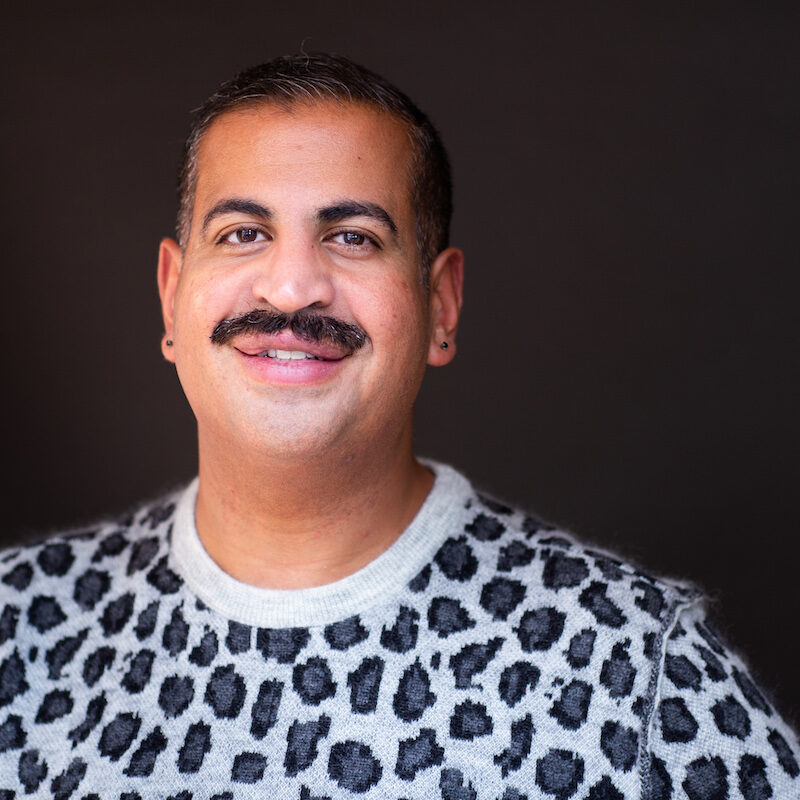
Ramy El-Etreby, MA (he/him)
Ramy El-Etreby is a writer, performer, storyteller and educator based in Los Angeles. Ramy holds an MA in Applied Theatre from the CUNY School of Professional Studies and currently teaches in the Theater Arts department at CSULB. Ramy’s writing appears in the anthologies New Moons: Contemporary Writings by North American Muslims (2021) published by Red Hen Press; Salaam, Love: American Muslim Men on Love, Sex, and Intimacy (2014) published by Beacon Press; and Graffiti (2019) published by Aunt Lute Books.
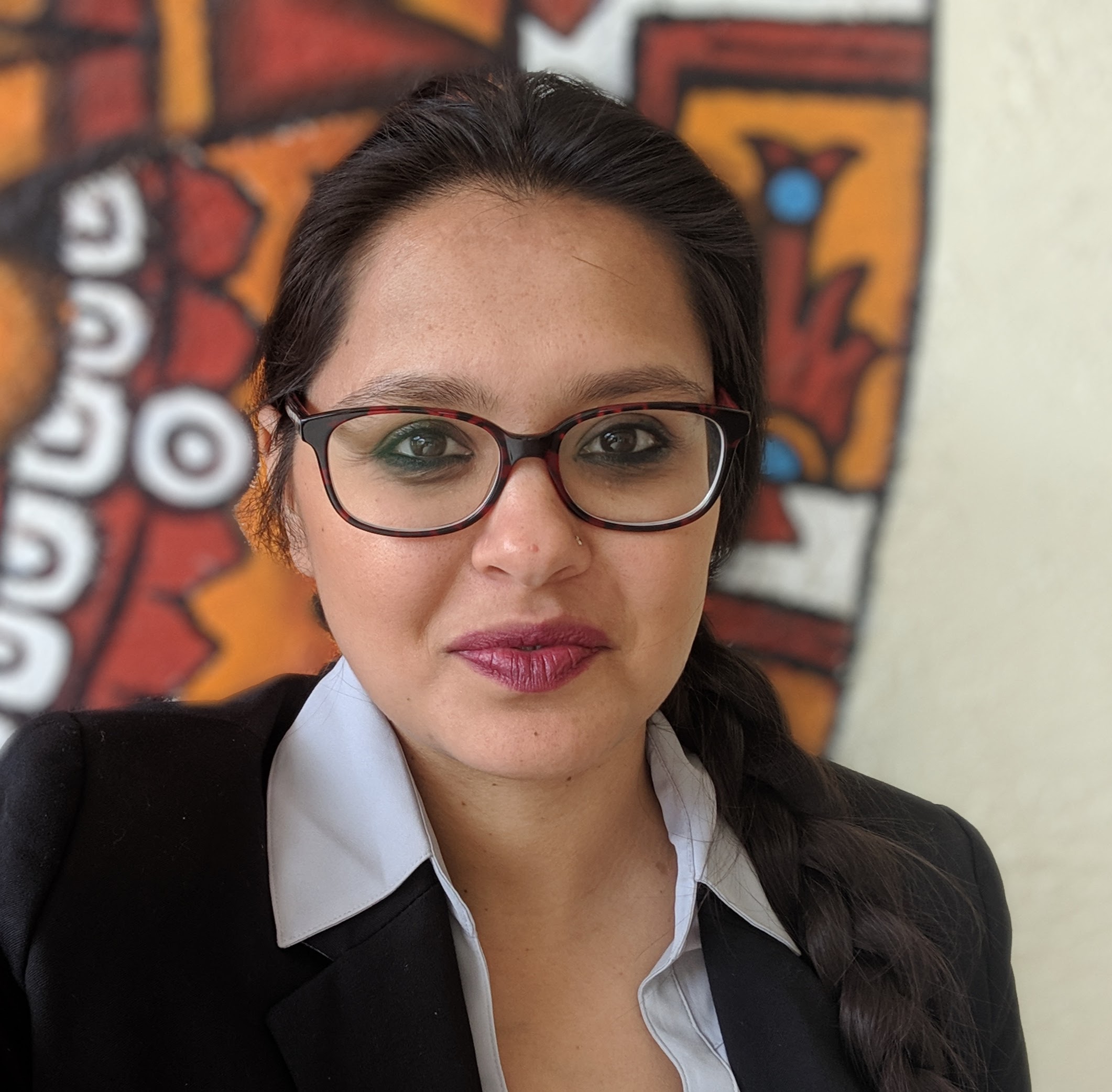
Tatiana Chaterji, MFA (she/her)
Tatiana Chaterji served as one of the earliest Restorative Justice Facilitators in the Oakland Unified School District, her deepest assignment at Fremont High School where she planted seeds for strong Tier I implementation towards a culture of belonging, care, and connection. She is a contributing author to The Little Book of Youth Engagement in Restorative Justice: Intergenerational Partnerships for Just and Equitable Schools, committed to building pathways for young people to express themselves, lead, and take meaningful action. Living with a traumatic brain injury from community violence and grieving the loss of too many students to interpersonal and state violence, she embodies rigorous love in setting free the cycles of healing we need for collective liberation. Tatiana situates herself within feminist and womanist traditions of challenging carceral responses to harm, having been part of visionary projects like INCITE! and Creative Interventions. She is a Freire-head and founding member of Partners for Collaborative Change (formerly Practicing Freedom), a collective of Popular Educators and participatory theater artists. She holds space for embodied conflict transformation and cultural resistance, pulling from Drama Therapy, martial arts, unarmed stage combat, Boal’s Theatre of the Oppressed, Grotowski’s Poor Theatre, Sircar’s Third Theatre, Playback Theater, performance poetry, Moreno’s Psychodrama, long-form improvisation, and other traditions. Her curriculum, A Mirror, A Threshold, A Song: Medicines of Healing in Theater Arts and Restorative Justice was published through California Arts in Corrections and California Shakespeare Theater.
Frequently Asked Questions
- Can I come to some of the Institute if I can’t make the whole time? Yes, please come to as much of the program as you can!
- Are CEs offered? Yes, one (1) CE Contact Hours will be available and be offered for LCSW, MFT, LPCC, LEP, CCAPP & RN licenses, and is available at no-cost. Participation will be monitored, you must be present for the entire duration to be eligible for credit. A link will be shared at the conclusion of the training to access.
- Are certificates of completion offered? Yes, upon request.
- Will this space be recorded? Yes.
Resources for Extended Learning
Resources about Storytelling & Coherent Narratives
- About – Better Because Collective
- Core Texts from our Re-writing Our Narratives: Cultivating Awareness and Collective Care through Critical Literacy – A Critical Friends Group program
- A New Spelling of My Name (Audre Lourde, 1982)
- Emergent Strategy: Shaping Change, Changing Worlds (adrienne maree brown, 2017)
- Pause, Rest, Be: Stillness Practices for Courage in Times of Change (Octavia F Raheem, 2022)
- We Were Made for These Times: Ten Lessons on Moving through Change, Loss, and Disruption (Kaira Jewel Lingo, 2021)
- The Healing Power of Storytelling | Harvard Medicine Magazine + Health Story Collaborative
- Heart A Like River – an art-based recovery & renewal practice to help us tell our stories from SCRR Guest Faculty José González
- Hill, JaShawn & Soprych, Andrya. (2024). Beginning the Healing Journey: Re-Storying Violent Loss through Tree of Life Narrative Groupwork. Advances in Social Work. 24. 269-285. 10.18060/27353.
- Naming A Thing: A Case For Feeling a blog by SCRR Guest Faculty Noor Jones-Bey
- Three Texts to Help You Reflect on Your Grief-Responsive, Trauma-Informed Practice a blog by SCRR Guest Faculty Brittany R. Collins
- Why Your Brain Needs Stories (Cheyfitz, 2024)
And: check out the many learnings and offerings from our previous Institutes on our “Mending our Wounds” – Educator and School Leader Recovery & Renewal resource hub.
In the words of the participants from previous SCRR Winter Institutes:
“I feel as if something has been poured into my spirit; restored…“
“This SCRR program allowed me to reconnect with myself, identify and take time for my own self-care, and be reinforced that it is necessary for personal reflection and care in order to care for others.”
“I have a personal and professional interest in collective care practices to promote healing and well-being. Feeling the stress like many others I know that the more balanced and self-regulated I am impacts the community around me, which attending this webinar helped tremendously!“
“Self-reflection and acceptance of where I am, who I am, and where I am going.“
