Acknowledging Our Humanity
Reimagining A Professional Development Plan that Supports Educator Emotional Wellness, Too
January 30, February 6, 13, 20 and 27, 2024 • 11:00 a.m. – 12:30 p.m. PT/ 1:00 p.m. – 2:30 p.m. CT/ 2:00 p.m. – 3:30 p.m. ET
This event has passed.
- In the context of the school crisis aftermath, how can we use professional development time wisely and sensitively?
- How might we address the emotional and psychological impact of the burdens placed upon schools, which is often undeserving of our young people (experiencing and witnessing the cycles of violence)?
- How might we, as professional development facilitators and designers, cultivate the culture within our school teams so that attending to our emotional landscape is safe and possible?
- How might your school’s professional development expand to support the varied experiences and needs of your staff as they hold students through and amidst crisis?
What is this?
Professional development (PDs)spaces-whether is an hour weekly or a couple days every semester- have the opportunity to be experiences for school teams and staff that are wellness oriented and sensitive to the needs of the team members. Often in the midst of a crisis or in the months or years in recovery after a big thing happens, we go “back to business as usual” or might feel challenged with how to incorporate a big experience into our regular PDs. Within this community of practice, we acknowledge that a precursor to creating a Trauma Informed and Healing Centered school space is ensuring that the adults in the space have the emotional, cognitive and relational capacity to address the shifting dynamics of each day.
Join this six-week community of practice to explore the power and potential of expanding our healing centered engagement to include the way we approach professional development. Humanizing the processes and practices included in professional development strengthens staff internal fortitude, engagement and retention by increasing our emotional and psychological capacity, ultimately strengthening positive outcomes for students.
Why is this necessary for crisis work?
Now more than ever, experiences of burnout and vicarious trauma are on the rise given the intersectional experiences and stressors facing teachers and administrators. A key protective factor and critical element of renewal, amidst pervasive crisis, loss and instability is having access to spaces and processes that support honest expression, witnessing, attuning and co-regulating, mourning, remembering and connecting. Through these efforts we are able to establish, restore and protect our sense of safety and the bandwidth to engage in social action efforts to challenge and transform the conditions that are causing us harm. But how to do that can be daunting, scary, and a big change in our conditioned responses and programming if we aren’t trained on how to create those kinds of spaces!
How might it feel?
Each week we will engage in text study, reflective inquiry and conversation to incorporate healing centered values and practices in professional development.
Through self and community reflection, we will disrupt our default and unnatural practices in schooling. Within this collaborative space, we will use a humanizing lens to enhance best practices within professional development such as peer consultancy, self and community assessment, goal setting, resourcing and active learning.
Learning Goals
- Develop skills to attune and attend to emotional needs as related to the work environment.
- Create an emotional needs assessment to help identify what is being experienced by the collective in the workplace.
- Create your own professional development plan including scope and sequence through a humanizing frame.
Intended Audience
- School administrators, instructional leadership team members, teachers leaders, and anyone who is in charge of professional development spaces in or outside of school walls
- Anyone who tends supports the goal setting, visioning, implementation of school or organizational professional development or smaller planning teams, supervisors, peer leaders.
- Anyone who works to address school culture, climate or professional development for school staff and or/ students.
Lead Faculty

Oriana Ides (she/her), MA, LPCCI, PPS
SCRR Field Coach
Oriana Ides is the School Mental Health Training Specialist at CARS, who approaches healing the wounds of trauma and oppression as core elements of social justice. She has worked with young people across life course from elementary school to college, and has served as teacher-leader, school counselor, classroom educator and program director. She is committed to generating equity within school structures and policies by focusing on evidence-based mental health techniques and institutional design. Her work to forge a more just world is motivated by and dedicated to Amilca Ysabel Mouton Fuentes.
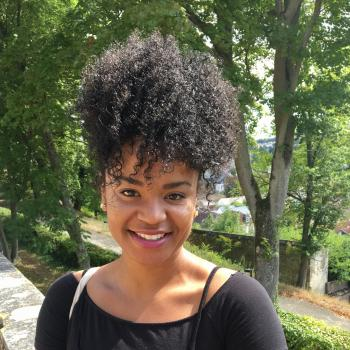
Dr. Noor Jones-Bey (she/hers)
SCRR Guest Faculty
Noor Jones-Bey is a transdisciplinary educator, researcher and artist from the Bay Area, CA with over a decade of experience working within the field of education. As a scholar and practitioner deeply interested in the movement between theory and practice, Noor has extensive experience designing humanizing programming and curriculum that is responsive and relevant to the global and local communities she works within. Noor currently serves as an equity and design consultant, providing technical assistance to client serving professionals and organizations nationwide. Noor received an PhD in Urban Education from New York University, a M.A. in Sociology of Education from New York University and a B.A. in American Studies from the University of California, Berkeley. Noor’s interests engage across disciplines of sociology, education, Black and Native studies, and visual culture to examine issues of liminality, identity, space and power as they relate to education. Her dissertation work examines intergenerational knowledge of Black womxn and girls navigating in and out of schools. In her spare time, she loves to cook, dance, run marathons, travel, and stir up good vibes.
Frequently Asked Questions
- Will closed captions be provided? Zoom generates automated captions and a transcript that participants can enable during the training.
- Will this offering be recorded? No.
- Is this offering eligible for Continuing Education (CEs)? No.
- Who can I contact if I have additional questions? Email us at scrr [at] cars-rp.org with “Acknowledging Our Humanity” in the subject line.
Resources (priming for participants)
- Humanizing Professional Development with Linda Darling Hammond
- Humanizing Pedagogy: Reinventing the Principles and Practices of Education as a Journey Toward Liberation
- Healing Justice Lineages: Dreaming at the Crossroads of Liberation, Collective Care, And Safety
- Grief Work: Being with and Moving Through Resistance to Change in Teacher Education
