Creating the Container for Us: How to Hold Space for Ourselves & Each Other After Student Death
February 29, 2024 • 10:00 a.m. – 2:00 p.m. PT/ 12:00 p.m. – 4:00 p.m. CT/ 1:00 p.m. – 5:00 p.m. ET
view your time zone
This event has passed.
How might we build our skills and visions for how we will come together as staff after student loss?
How might we make sense of school-based loss and how that informs who we are as administrators, educators, clinicians, and youth advocates?
When students die, we understandably and necessarily mobilize to support our surviving students, their peers, and the connected community. We tend to assume, however, that the staff doing that mobilization are ok, and/or we forget to create space to make sense of what just happened (let alone for what happened months ago, or even years ago).
The task of creating and holding space for the adult staff in a school, system, division, or organization after student death is one that we as administrators, staff, and school leadership rarely get support with.
Join SCRR and The Dinner Party Labs for a special seminar on how to facilitate space-holding for educators after a student dies, & the role of collective rituals in processing. Let’s support the supporters and care for the caregivers.
February 29, 2024 • 10:00 a.m. – 2:00 p.m. PT/ 12:00 p.m. – 4:00 p.m. CT/ 1:00 p.m. – 5:00 p.m. ET
During the seminar, participants will learn how to organize a gathering, and the ins and outs of holding space: from how to structure a gathering, to how to care for yourself and others, to what to do when things go awry. You’ll also have a chance to experience a space for educator communal care firsthand, and to share and reflect on your own experiences of loss and life after.
Our Outcomes
- Learn how to hold space for educators to connect and share about what it means to teach, lead school sites or systems, and provide school services after the death of a student or alum.
- Guidance and tips on how to create intentional, peer-led spaces for educators to engage in conversation around their experience with death-related, school-based losses as a means towards healing.
- Experiential time to hone our “holding space skills”: how to notice and name what you have capacity for, learning to sit with discomfort — be it your own or that of a grieving friend or colleague, how to ask good questions, and group facilitation strategies to create and maintain a safe space.
- Explore evidence-based research on the specific impact of engaging in rituals collectively as opposed to individually.
- Engage in reflective practice that in itself allows you to better lead your community and team
Who is this for?
- School site and system administrators
- Crisis responders
- Teacher leaders
- School partner movements and organizations that work with students (e.g., Community Schools)
- School mental health professionals
- And anyone interested
Faculty
Main Faculty
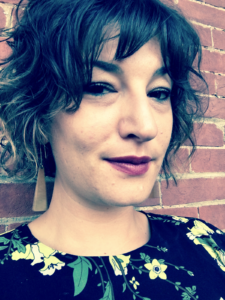
Leora Wolf-Prusan (she/her) EdD
SCRR Project Director
Leora Wolf-Prusan serves as the Project Director for the School Crisis Recovery & Renewal project and as the School Mental Health field director for the Pacific Southwest Mental Health Technology Transfer Center (MHTTC), in addition to many other facilitation projects. Previous roles include a national field director of a SAMHSA initiative (ReCAST) and technical assistance for the Student Mental Health Program for California’s Community Colleges, CalWORKs, and more. With years of training and facilitating learning and community building in schools p-16, Wolf-Prusan is skilled in facilitation, human learning design, training, and coaching. Wolf-Prusan is dedicated to work focused on educator mental health, wellness, and trauma-informed approaches to education and operates through a framework in which public health, social work, and education intersect. Her research examined the impact of student death on teachers, what factors contribute to teachers building resiliency, and what supports teachers need from the school system in the event of a student homicide or other traumas. She received a BA in international relations and a BA in Spanish with a minor in Social & Ethnic Relations from the University of California, Davis; a teaching credential from Mills College; and an EdD in educational leadership from the University of California, Los Angeles.
Her work in school crisis recovery and renewal is motivated by and dedicated to educators and youth who envision schools as a platform for community and connection.

Oriana Ides (she/her), MA, LPCCI, PPS
SCRR Field Coach
Oriana Ides is the School Mental Health Training Specialist at CARS, who approaches healing the wounds of trauma and oppression as core elements of social justice. She has worked with young people across life course from elementary school to college, and has served as teacher-leader, school counselor, classroom educator and program director. She is committed to generating equity within school structures and policies by focusing on evidence-based mental health techniques and institutional design.
Her work to forge a more just world is motivated by and dedicated to Amilca Ysabel Mouton Fuentes.
Guest Faculty
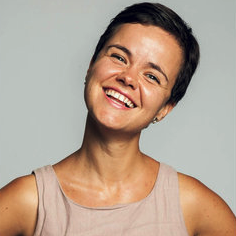
Lennon Flowers (she/her)
Co-founder & Executive Director, The Dinner Party
Lennon lost her mom during her senior year of college, following a four-year fight with lung cancer. Three years later, she hitched up her wagon and headed West. Three-thousand miles away from home, she found she no longer had anyone with whom she could talk about her mom, and explore the way in which her life, death, and absence continued to affect her. When Carla, a friend, colleague, and soon-to-be roommate, invited her over for dinner, it was a no-brainer. In January 2017, she, together with partners at Faith Matters Network and Hollaback!, launched The People’s Supper: a nationwide effort to create healing spaces that strengthen our individual and collective resilience and wellbeing, and to repair the breach in our interpersonal relationships across political, ideological, and identity differences. Lennon previously served as Community Director for Ashoka’s Start Empathy Initiative. She has written for CNN, Fast Company, YES!, Forbes, Open Democracy, and others. She is an Ashoka Fellow and an Aspen Ideas Scholar, and a Phi Beta Kappa graduate of UNC-Chapel Hill.
Frequently Asked Questions
- Will closed captions be provided? Zoom generates automated captions and a transcript that participants can enable during the training.
- Will this offering be recorded? No.
- Is this offering eligible for Continuing Education (CEs)? Yes, four (4) CE Contact Hours will be available at no-cost for LCSW, MFT, LPCC, LEP, CCAPP & RN licenses. Participation will be monitored, you must be present for the entire duration to be eligible for credit. A link will be shared at the conclusion of the training to access.
- Who can I contact if I have additional questions? Email us at scrr [at] cars-rp.org with “Creating the Container” in the subject line.
Testimonials
After attending the training in the Fall of 2023, participants shared what they took value in and planned to implement in their workplaces:
We experienced the loss of one of our youth the day before I received this email announcing this program, and I am so grateful for it. Our organization has taken some time to see how we wanted to process and hold space for each other and scheduled a gathering for next week, and I just feel so much more prepared and able to be in that space thanks to this program, but I also feel like I can bring the approaches shared here to the organizing team before we gather to “go back” and consider some key questions that might have been missed in our design, but were at the forefront of this program…
It was validating to gain insight on the work I am doing in my community is meaningful even when I am met with resistance.
It assisted in normalizing grief and challenges within the school system to provide the best/appropriate supports.
Clarifying Questions
- What do you mean by “educator”? We define “educators” as anyone tending to the wellbeing of students in school based settings, serving and supporting school-aged youth. You might be an afterschool service provider, a state, district, or county school administrator, a school-based clinician, a principal, a teacher, a bus driver, a coach, or a professor or someone working in advocacy who used to teach K-12. Whatever your present-day role, you, too, are welcome here.
- What do you mean by student loss”? We define “student” as a young person you knew or had a relationship with in any capacity, at any time. The student may have died years after they left school, and you may have been out of touch by the time of their death: the impact remains no less real. And they may have died from any cause: a car accident, illness, suicide, overdose, or violence.
- I’ve lost a student, but I don’t really identify as grieving. Is this right for me? You do not need to identify as a “griever”: In fact, many of us struggle with the word, whether that’s because we were never afforded the “right” and the space to grieve, or because the death happened years or even decades ago, and we’ve long since found ways to move forward, even as we continue to be colored by the experience in ways big and small.
- Is this a training on how to hold a grief support group, or a form of therapy? No. These gatherings may be therapeutic, but they’re not therapy. We’re not interested in professionalizing anything, but in humanizing everything. If you yourself are a counselor or school-based social worker, remember that this is a chance to take off that hat for 90 minutes and to show up as peers, not professionals.
Resources
- February 29, 2024 Slide Deck
- “Creating and Holding Space for Ourselves and Each Other After Student Death,” (2023) a guide to processing, meaning-making, and integration as educators for our collective recovery and renewal. This seminar was developed from the learnings in this guide.
- “Creating the Container: Designing Collective Rituals to Metabolize Grief Together as a School, Team, Community and Culture (2023)” is a worksheet born out of our “Life After Loss Tables,” series and this seminar and may be used to support you in creating space for your community to process student death and loss.
