Self & Collective Attuning: Tending to Emotional Activation in these Acute Times
Processing pain while witnessing violence & mourning loss as we provide care for the young people we serve
A special collaborative session
Held jointly by the School Crisis Recovery and Renewal project and the Center for Adjustment, Resilience, and Recovery (CARRE)
December 12, 2023
⏰ 11:00 a.m. – 1:00 p.m. PT / 1:00 p.m. – 3:00 p.m. CT / 2:00 p.m. – 4:00 p.m. ET
(view your time zone)
This event will not be recorded.
- How might we increase self-awareness and inquiry into the therapeutic dynamics and situations that activate us?
- How might we be able to support our own emotional needs and healing to better support the therapeutic needs of our colleagues and the young people we serve?
- How might we counter alienation and nourish connection as providers with ourselves, for ourselves?
Join us for a special collaborative session held jointly by the School Crisis Recovery and Renewal project and the Center for Adjustment, Resilience, and Recovery (CARRE) (two National Child Traumatic Stress Network Category II sites) to create space for service providers (based in schools or community) who want to engage the practice of attuning and attending to our emotional landscape as we witness institutionally sanctioned and unprecedented death and violence.
Why is this necessary for our work?
Always: Our ability to provide trauma-informed care and establish healthy therapeutic relationships are greatly predicated on where we are in our own healing journey.
Right now: Our ability to provide trauma-informed care for students, youth, staff and community can be challenged if we are not tending to our experiences with genocide, vicarious grief, intergenerational trauma, mass violence, experiences of displacement and so much more.
Without acknowledging, reframing and healing our own hurts, as service providers, we run the risk of internalizing the behaviors and needs of others, miss important signs, operate from a compromised parasympathetic nervous system or find ourselves stuck in a self-defeating stress response such as fight, flight, freeze, fawn or countertransference.
These heavy and pivotal knowings require a brave space to examine, unpack and explore.
And! Grounded attunement to the wellness of our colleagues, communities and the people we serve as they recover and renew after a crisis requires our own ability to care for ourselves. It is difficult to provide support and guidance after times of crisis if we don’t have the space to notice and inquire into the ways our personal unhealed trauma surfaces when witnessing and providing care for the healing of others.
This is a time to befriend our feelings to use them in creating a world we desire.
How might it feel?
Facilitated by SCRR and CARRE clinical staff, we’ll explore the ways in which we might alchemize our strong emotions; fear, loss, grief and rage, for ourselves and our communities.
We’ll engage with our own emotional landscape in this moment, with what this moment is activating in us (even in the young person within ourselves). Participants will be guided in self attuning exercises that can be used with the people they work with or simply be experienced for the moment.
We’ll then move into break out spaces, each exploring a strong emotion that is present for us in this moment.
We close by coming together to process as a collective space.
Please feel free to come for as much as you can!
What this is:
A space that invites you to hold yourself and your experience with compassion. An experiential virtual space that engages us in reflective inquiry around the experiences we’ve lived through, as well as how they impact and inform our ability to provide responsive mental health services for others.
What this isn’t:
A place to argue, dispute, or call into question a people’s dignity, humanity or right to exist. This is not a 101 on sociopolitical history. This is also not a traditional, didactic, “how-to” training or webinar.
Learning & Experience Goals for the Special Session
- Understand normative fears during trauma with specific attention to children with lived experience of forced displacement and witnessing oppression and ongoing violence
- Create a brave, generative, and regulating space for educators to explore the interconnection between lived experience and their current ability to uphold trauma informed engagement.
- Engage in community valued, trauma informed regulation strategies that positively impact the process of recovery and renewal.
- Imagine new ways of incorporating recovery and renewal activities into therapeutic intervention, classrooms and curriculum, peer and student interactions, meeting structures and personal lives.
- Identify individual and collective protective factors, community assets and stressors, significant loss, trauma and opportunities for growth
- Build community capacity and peer support to respond to mental health needs in forcibly displaced communities
Intended Audience
- Specifically for: school mental health and or community based mental health providers who work in/with schools or in/with communities.
- Open to: Anyone who tends to the wellbeing of young people in school settings (educators, school leaders, case managers, mentors, therapists, restorative justice coordinators, retention coordinators, advisors, deans, school leaders, educators, community service providers, guidance counselors, social workers,etc.)
Frequently Asked Questions
- Will closed captions be provided? Zoom generates automated captions and a transcript that participants can enable during the training.
- Will this offering be recorded? No.
- Is this offering eligible for Continuing Education (CEs)? Yes, two (2) CE Contact Hours will be available and be offered at no cost for LCSW, MFT, LPCC, LEP, CCAPP & RN licenses. Participation will be monitored, you must be present for the entire duration to be eligible for credit. A link will be shared at the conclusion of the training to access.
- Who can I contact if I have additional questions? Email us at scrr [at] cars-rp.org with “Trauma Informed School Systems for Crisis Recovery and Renewal” in the subject line.
Faculty
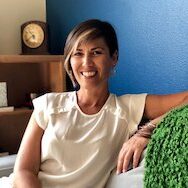
Dania March (she/her/hers), MPH, PPSC, LCSW
Dania March joins us as SCRR guest faculty. Dania is a Jewish, white, queer, cisgender female. She has been working in community health services centering youth for over 20 years in roles from health educator to behavioral health services provider and director of programming. Currently, Dania has a private psychotherapy practice in which she offers individual and family psychotherapy and coaching; workshops; and clinical supervision for behavioral health providers in community settings. Dania’s approach is rooted in equity and justice, anti-oppression, harm reduction, and trauma-informed philosophies. She supports individuals and organizations in uncovering their foundations to stay rooted and flexible while building programs, policies, and strategies towards greater resilience and thriving.
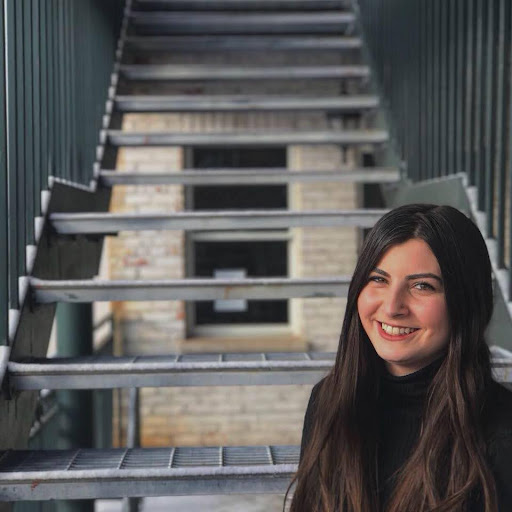
Leena Zahra (she/her/hers), MSc
Leena Zahra is a Muslim, Middle Eastern, heterosexual, cisgender female. She is a Program Officer for the IRC and CARRE, and a Syrian-American social impact specialist. With over seven years of humanitarian community outreach, program management and strategic advocacy experience, she has worked with small to large-scale Nonprofits, NGOs, and government agencies like the World Food Program (WFP), International Rescue Committee (IRC UK), Karam Foundation, and U.S. Senate. She has a Master’s in International Development and Humanitarian Emergencies from the London School of Economics (LSE).

Oriana Ides (she/her), MA, LPCCI, PPS
Oriana Ides is a School Crisis Recovery & Renewal project field coach and a School Mental Health Training Specialist at the Center for Applied Research Solutions, who approaches healing the wounds of trauma and oppression as core elements of social justice. She has worked with young people across the life course from elementary school to college, and has served as teacher-leader, school counselor, classroom educator and program director. She is committed to generating equity within school structures and policies by focusing on evidence-based mental health techniques and institutional design. Her work to forge a more just world is motivated by and dedicated to Amilca Ysabel Mouton Fuentes. Oriana is a first generation, South Asian, mixed race, heterosexual, cisgender female.
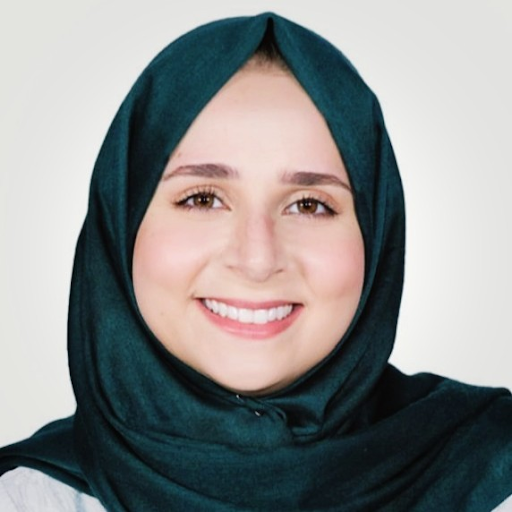
Shefa Obaid (she/hers)
Shefa Obaid is a Technical Advisor for the International Rescue Committee supporting the development, review and innovation of culturally and psychologically oriented evidence-based interventions and guidelines for the Center for Adjustment, Resilience and Recovery (CARRE).
She has over 8 years of experience working on technical oversight, direct implementation, development and monitoring of psychosocial support, counseling and protection initiatives, focused on those who have been displaced in the middle east and beyond with various international humanitarian organizations. Shefa holds a bachelor’s degree in psychology from the University of Toronto and is pursuing her MSci in Psychology. Shefa is a Canadian Jordanian Muslim of Palestinian descent, heterosexual, cisgender female.
Learn more about Center for Adjustment, Resilience and Recovery, A Category II National Child Traumatic Stress Network Site
CARRE’s goal is to ensure that refugee, asylum-seeking, and other forcibly displaced children, youth, and families receive culturally responsive, evidence-based, and trauma-focused treatments and service interventions across a wide array of systems to prevent the long-term, negative impacts of childhood traumatic stress. Our team of experts achieves this through training and technical assistance and by leading pilots of culturally accessible evidence-based interventions with community partners.
According to UNHCR, “Global forced displacement has reached 103 million at mid-2022. At the end of 2021, of the 89.3 million forcibly displaced people, an estimated 36.5 million (41%) were children below 18 years of age. Between 2018 and 2021, an average of between 350,000 and 400,000 children were born into a refugee life per year. 1.5 million children were born as refugees.”
Specialized knowledge of the unique issues and circumstances surrounding displacement and the migratory path, as well as culturally appropriate adaptations to services and interventions is essential when working with forcibly displaced populations and practicing trauma-informed care.
While trauma is unique to respective cultures and to the individual, it is also important to note that children often do not have the words to express how they feel, with their emotions becoming evident in behaviors or how they act.
Learn more about the School Crisis Recovery & Renewal project, A Category II National Child Traumatic Stress Network Site
SCRR supports students, educators, school staff, and school-based clinicians to effectively implement trauma-informed crisis recovery and renewal strategies. We are excited and grateful for the opportunity to support school communities in the critical work of school community recovery and renewal through and after a crisis.Collectively, we bring expertise in trauma-informed services and systems change, grief and bereavement, school mental health crisis leadership, healing-centered systems work, and much more. We are an interdisciplinary team of educators, therapists, physicians, public health workers, school mental health practitioners, youth advocates, and many others. We are committed to learning the needs of the field and translating these needs into responsive support through trainings, technical assistance, and resources.
Our project’s aim is to be collaborative and constructivist—we hope that by the end of this project, we as a nation will have a more rich, complex, and resourced understanding of school crisis that 1) includes recovery and renewal and 2) is steered by educators, students, and community members.
