What did and does bereavement mean to you? A conversation between a school social worker and her daughter
Categories: Memorialization & Commemoration, Trauma, Bereavement & Grief
Angela interviews her daughter Jamee about the loss experience of Angela’s partner and Jamee’s father. Angela asked Jamee: What did bereavement mean to you then? How did school support you? Not support you? How do you understand bereavement today?
I was honored to be asked to write my story about bereavement and its connection to my role as a social worker of 25 years, a partner and a mother. It has been a special journey to learn from my experiences through the lens of each role. As a Licensed Clinical Social Worker, I have supported hundreds of individuals during their grief journeys. It was easier to be an outsider joining their pain and struggle instead of looking internally at my personal experiences with bereavement.
That’s because the internal takes work and intention. Personally, the internal work was difficult, exhausting and long. As a professional, I knew what to do, I knew the work it took, and I was very fortunate to have the resources to help me through this journey. But the exploration took me further. As I thought about the questions, “What did bereavement mean to me?”, my curiosity led me to wonder how my perspective was different or the same from my daughter. Afterall, we experienced these losses-these crises- together. I invited her in to tell me her story, give me insight on what her experience was like losing her dad at eight years old, experiencing a major crisis at 16, and now as a 28-year-old, losing her grandmother, and how she made meaning of bereavement years later.
Here’s a capture of our conversation:
Angela: What does bereavement mean to you, then?
Jamee: When my dad died, I wasn’t aware of what bereavement meant. I was confused. But I do remember feeling nauseous and I knew something was wrong. As an 8-year-old, this meant that my body was telling me that I was experiencing something, but I couldn’t figure out what that was. After the crisis, I remember every single detail. Although I was only 8, I didn’t know what was happening, but I knew what was happening. I didn’t feel things right away, there was a pause for a moment. When my aunt came to pick me up at my uncle’s house where the homicide occurred after the crisis, I then felt sad. Bereavement didn’t make sense to me as a child. But at that time, it felt like I was going through a process my body was telling me and I knew I was sad.
Angela: How did school support you and not support you?

Jamee: Each death related crisis I experienced was at different ages and times. When my dad died, my 3rd grade teacher really helped me. She always checked in with me and gave me my space when I didn’t want to talk about it. The school also allowed me to add a memory tile to the “Wall of Honor”. This was a nice process. I didn’t really need the school support because I had the support from home (note from Angela: Jamee may not remember, but educators and the school partnered with our family to create seamless support; the fact that it was so seamless that she didn’t notice in itself is positive). But those that don’t have the same support, I encourage to seek it. It is helpful to talk to someone about the experience. It helps to set some normalcy for all of the feelings that come during the grief process. Especially as a child, I just needed to understand the death part because my situation at that time was very tragic. The adults at school can be supportive by being comfortable with bereavement, checking in with students is important, and open the space when the child is ready to talk about it.
Angela: How do you understand bereavement today?
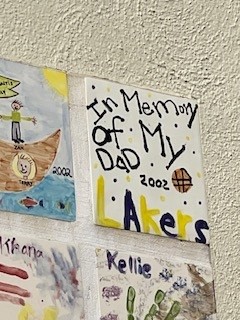
Jamee: Now that I am older, I understand that bereavement is a part of life, a process and it can impact you in different ways at various phases in life. The hardest part for me was that each event happened at different times and were all very tragic. I don’t want to lessen someone else’s experience just because they were not traumatic or tragic as mentioned everyone has a different experience. After my grandmother died, I lost my faith for a moment. After three years, I have been able to rebuild that faith, to understand that this is a continual process and I’ve learned to be kind to myself as I experience each step.
My dad died 19 years ago, and there are seasons that he comes up for me. For instance, I would have wanted him to see how great I was in sports, he would have been joyful about that because he was competitive and athletic. At times other emotions come up, and I ask myself “Why are you still upset about this?” My awareness has helped me to understand these emotions, that they may creep up at times, and that I may not want to work through them at the moment. But I go back to being kind and compassionate knowing “that this too shall pass” and it’s a process. It has been helpful to stay focused on the present, work with what’s in front of you, and let it take its course. This is how the process works, there are ups and downs and the grief stages do not happen in order.
I continue to seek support when I need it. I am more comfortable with sharing my story with others and happy that I have the support I need in my life to feel safe, secure and loved.
Listening to my daughter’s story provided insight into my devotion as a parent to wanting her to be safe and just be okay as she processed grief as a child and now as a young adult. Balancing my roles as a social worker and mother was definitely a process when her dad died. However, here are some helpful tips that can guide your journey.
As a parent and a caregiver:
- Be curious: learn ways on how children work through grief and connect to how your own child is working through their own grief
- Be patient: sometimes children may not be ready to share or they may not know how to share their grief
- Connect: support that is helpful such as friends, family and/or spirituality
- Learn: Explore resources that support growth such as counseling, support groups.
- Teach: share the cultural ways to celebrate your loved ones, find a way that is comfortable for your child to celebrate together
- Allow: Let the process happen when it needs to, once children learn to verbalize their grief they will share and you can provide the space to listen.
As a school based social worker:
- Get your own support: As professionals, we will all experience some form of loss personally and professionally. When this happens, it is important to create a space that is safe for you to discuss your own personal journey. The intention behind this is that we want to be available to embrace the stories that children are sharing without personally becoming activated.
- Create work boundaries: Curate attunement that allows the freedom to let your team and supervisor know when a crisis is too close to home and say “ I can’t respond to this crisis”. When children experience community grief, they will appreciate that the adults supporting them are attune to their needs at the moment. It is okay to take care of yourself when a situation arises that can activate any feelings for you. It is also okay to participate in supporting children but make sure that here is a space to debrief your experience.
- Be a grief sensitive school leader: Schools can support their school mental health leaders by offering support, creating opportunities to share their experiences, and allowing them to take the time to recharge when needed.
SCRR community: Thank you for allowing both my daughter and I to share our perspectives of our experiences. We both celebrate and honor both of your own processes as you support childrens’ bereavement this month and always.
With love and admiration,
Angela and Jamee
